
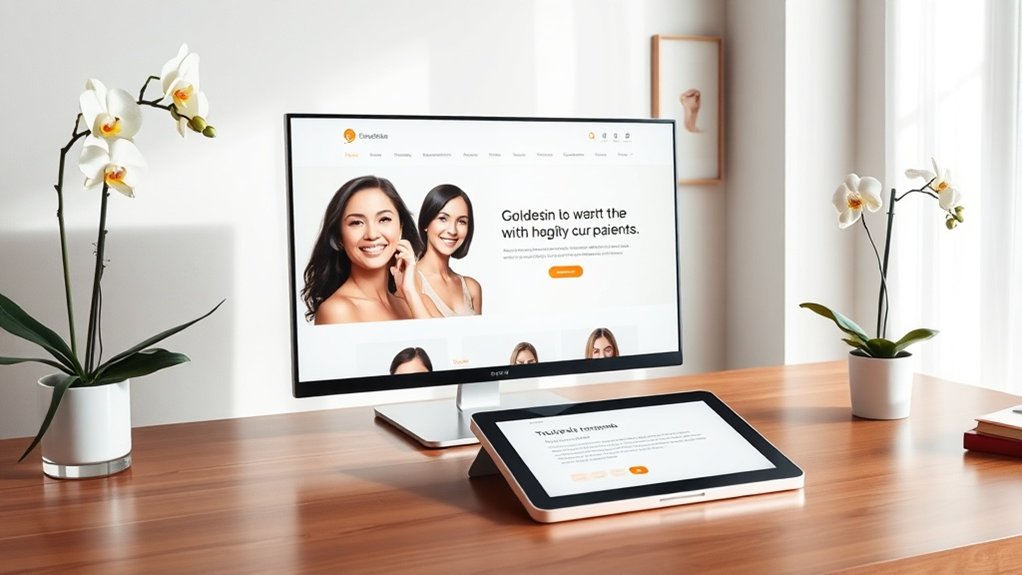
Top-performing plastic surgeon websites combine five essential elements that drive 3-5x more consultation bookings: stunning before-and-after galleries with high-resolution imagery, intuitive navigation that guides visitors seamlessly through procedures, prominent trust signals like board certifications and patient testimonials, lightning-fast load times under 3 seconds, and strategically placed call-to-action buttons that capture 57% more user attention. These sites don’t just showcase expertise—they’re conversion machines that turn casual browsers into consultation-ready patients. Below, you’ll uncover the specific tactics behind each element and how they work together.
Visual Excellence: How Top Plastic Surgery Sites Use Imagery to Build Credibility

When potential patients land on your plastic surgery website, you have mere seconds to capture their attention—and 94% of those critical first impressions hinge on visual design alone.
Top-performing sites utilize imagery impact through high-resolution before-and-after galleries that let visitors assess your surgical expertise firsthand. Dynamic hero images and videos create immediate engagement, while cohesive color schemes deliver a polished, professional appearance that builds trust.
Effective visual storytelling extends beyond results—showcasing your surgical team and clinic environment creates a welcoming atmosphere that establishes rapport.
Strategic placement of client testimonials alongside compelling imagery provides the social proof prospects need before committing. This combination of authentic visuals and documented outcomes transforms casual browsers into confident patients ready to schedule consultations.
While visually stunning imagery attracts prospects to your site, poorly structured navigation will send them straight to your competitors—and the data proves it.
Top-performing practices implement clear information hierarchy that categorizes procedures intuitively, letting visitors find relevant content within seconds. Your navigation architecture should feature internal linking between procedure pages, encouraging exploration of multiple services while enhancing user experience.
Streamlined layouts minimize clutter and emphasize essential information, preventing cognitive overload that drives prospects away. Strategic call-to-action buttons throughout your pages guide visitors toward booking consultations, directly improving conversion rates.
With over 60% of traffic originating from mobile devices, responsive navigation isn’t optional—it’s essential. Your architecture must function flawlessly across all platforms, ensuring accessibility for every potential patient.
Trust Signals That Matter: Social Proof, Credentials, and Transparency

Your website must showcase board certifications, professional affiliations, and patient testimonials prominently. Before-and-after galleries drive 94% of first impressions through visual appeal alone.
| Trust Element | Impact | Implementation |
|---|---|---|
| Board Certifications | Validates expertise | Header/footer placement |
| Patient Testimonials | Builds confidence | Dedicated page + homepage |
| Before-After Galleries | Demonstrates results | High-quality imagery |
| Professional Affiliations | Shows standards | Logo display |
| Live Chat Feature | Increases accessibility | Real-time engagement |
High-quality procedure videos and immediate communication channels through live chat create the accessibility that converts hesitant visitors into consultations.
Technical Performance Standards for Medical Practice Websites
Technical performance isn’t just a backend concern—it’s the foundation of your conversion funnel. Your plastic surgery website must load in under 3 seconds to prevent visitor abandonment.
Website speed directly impacts whether prospective patients stay or leave immediately.
Mobile optimization is non-negotiable when 60% of your traffic comes from smartphones. Responsive layouts guarantee accessibility across all devices, keeping potential patients engaged throughout their research journey.
Core Web Vitals—including Largest Contentful Paint and Cumulative Layout Shift—directly influence your search rankings.
Regular technical audits addressing broken links and canonical issues improve crawlability, boosting your visibility.
Schema markup establishes your expertise and authority by helping search engines understand your credentials and specializations.
These technical standards aren’t optional; they’re crucial for converting website visitors into consultation bookings.
Strategic Call-to-Action Placement and User Journey Optimization

When prospective patients land on your plastic surgery website, they’re making split-second decisions about whether to engage or exit.
Strategic CTA placement directly impacts these critical moments. Positioning CTAs above the fold captures 57% of users who focus on that prime real estate, while persuasive language like “Schedule Your Consultation Today” boosts click-through rates by 20%.
CTA effectiveness multiplies when combined with optimized user journeys. A logical information flow reduces bounce rates by 25%, keeping potential patients engaged longer.
Well-positioned CTAs can increase conversion rates by up to 200%, transforming passive browsers into active leads.
Don’t rely on guesswork. A/B testing different CTA placements and designs produces measurable improvements—often up to 30% better user engagement.
These data-driven adjustments separate top-performing plastic surgeon websites from their competitors.