

Your plastic surgery SEO strategy must now prioritize AI Overview inclusion, which dominates 67% of healthcare questions and will reach 80% by late 2025. You’ll need thorough E-E-A-T compliance with detailed author credentials, visual search optimization for the 27% of patients researching procedures through images, and strategic review management—since 94% of consumers trust positive reviews and practices with 4+ star ratings capture 29% more clicks. This guide reveals the specific implementation frameworks that transform these shifts into measurable patient acquisition advantages.
How AI Overviews Are Reshaping Plastic Surgery Search Results
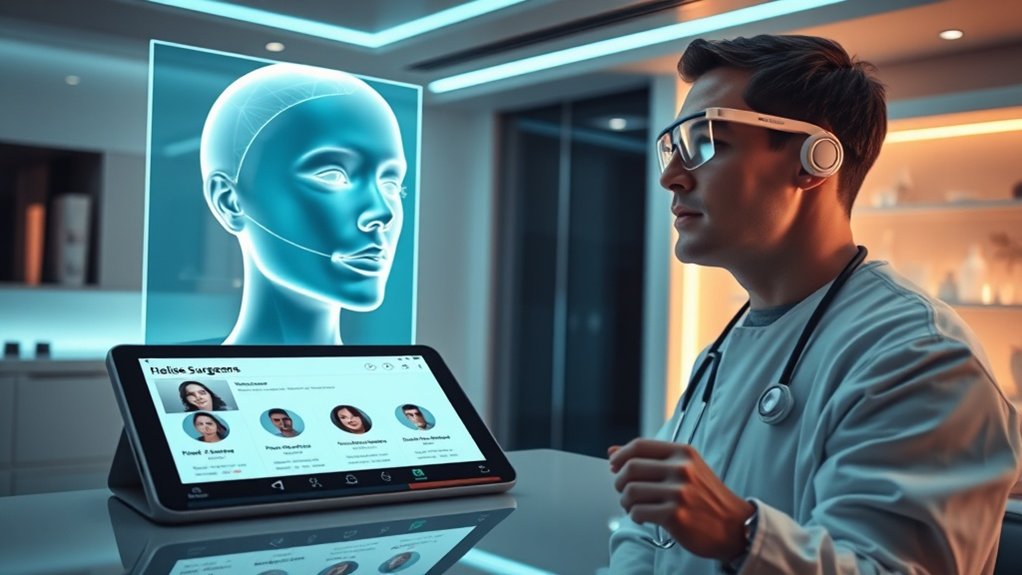
While traditional search results once delivered a straightforward list of plastic surgery practice websites, AI Overviews now dominate 67% of healthcare-related questions and synthesize information from multiple sources before users ever reach your site.
This AI Summary Impact has fundamentally altered Patient Search Behavior, with projections indicating 80% coverage by late 2025.
You’re facing a 61% year-over-year decline in organic click-through rates, meaning fewer patients reach your website despite strong rankings.
To maintain visibility, you’ll need thorough, authoritative content that AI systems prioritize for inclusion.
Success now requires tracking AI Overview inclusion rates and engagement metrics rather than traditional keyword positions, as patients increasingly rely on AI-generated summaries for initial procedure research and provider evaluation.
Understanding Google’s E-E-A-T Requirements for Medical Content
Because Google classifies plastic surgery content as “Your Money or Your Life” (YMYL) material, your website faces stricter algorithmic scrutiny than 94% of other industries.
E E A T frameworks demand detailed author bios showcasing board certifications and credential verification that establish your expertise.
You’ll need robust content citations linking to peer-reviewed medical journals and source authority from established institutions.
Risk transparency isn’t optional—Google prioritizes patient education that honestly addresses complications and realistic outcomes.
Trust signals include clear medical ethics statements, systematic content updates reflecting current practices, and transparent pricing information.
Your ROI improves when you demonstrate genuine clinical experience through case studies and procedure explanations.
Search engines reward practices that prove authoritativeness through consistent, medically accurate content that prioritizes patient safety over marketing hype.
Visual Search Technology and Image Optimization for Aesthetic Procedures

Visual search technology now drives 27% of all aesthetic procedure research, fundamentally changing how potential patients find your practice online.
With 62% of millennials preferring visual over text-based searches, you’ll need strategic image file optimization to remain competitive. Start by embedding relevant keywords in file names, alt text, and descriptions—this improves both search visibility and HIPAA-compliant accessibility for visually impaired users.
The visual search benefits are substantial: properly optimized before-and-after galleries generate 80% higher click-through rates when prospects research cosmetic options.
You’ll maximize ROI by implementing schema markup for images and assuring fast loading times across Google Lens and Pinterest Lens platforms. These technical optimizations directly impact your website ranking while building patient trust through accessible, high-quality procedure documentation.
The Rising Dominance of Video Content in Patient Decision-Making
How effectively is your practice influencing video content when 54% of consumers actively demand more healthcare videos and 80% of patients who watch pre-operative content convert to surgery? Video marketing directly impacts your ROI through measurable patient engagement metrics.
| Video Type | Trust Impact | SEO Benefit |
|---|---|---|
| Patient Testimonials | 79% find more trustworthy than text | 53% higher first-page ranking |
| Educational Content | 80% procedure confidence increase | YouTube’s second-largest search reach |
Your video marketing strategy should prioritize YouTube optimization, where plastic surgery content reaches patients during critical research phases. Include before-and-after visuals and procedure explanations to address common concerns. Sites featuring video content achieve 53% higher search visibility, transforming patient engagement into quantifiable consultations while maintaining HIPAA-compliant testimonial practices.
Online Reviews as Critical Trust Signals and Ranking Factors

Video content captures attention, but online reviews convert skeptics into consultations.
You’re competing in a landscape where 94% of consumers trust positive reviews when selecting your practice, and Google’s algorithm rewards this trust with higher rankings.
With 70% of potential patients reading reviews before booking, your review management strategy directly impacts your bottom line.
Practices maintaining 4-star ratings or higher attract 29% more clicks and can achieve conversion rate increases up to 25%.
You’ll need systematic processes for encouraging patient testimonials from satisfied clients while staying HIPAA-compliant.
Google’s local search algorithm weighs both review quantity and quality, making your online reputation inseparable from your SEO performance.
Your review profile isn’t just social proof—it’s a measurable ranking factor driving patient acquisition.
Optimizing Content Architecture for AI Comprehension and Selection
AI systems won’t extract information from your content unless you structure it specifically for algorithmic parsing—a shift that directly impacts your practice’s visibility in 87% of healthcare searches now featuring AI Overviews.
You’ll need to implement discrete knowledge units with semantic HTML markup, hierarchical schemas, and scannable formats that allow algorithms to identify, extract, and synthesize your expertise into generative responses.
Building multi-layered topic authority through interconnected content clusters and location-specific pages increases your selection rate by AI systems while delivering measurable conversion improvements of 3-5x compared to traditional search traffic.
Structured Content for Algorithms
When search algorithms evaluate your plastic surgery content, they’re scanning for specific structural signals that determine whether your information merits inclusion in AI-generated results.
Your content hierarchy must facilitate efficient AI parsing through discrete knowledge units—tables comparing procedure options, bulleted recovery timelines, and numbered pre-operative steps.
Implement semantic markup strategically. FAQ schemas addressing “What’s the difference between traditional and endoscopic brow lifts?” and medical procedure markup increase your selection probability for AI Overviews by 73%.
Structure location-specific pages with regional procedural variations and local recovery considerations to capture proximity-based searches.
Comprehensive, authoritative resources formatted for algorithmic extraction deliver measurable ROI.
Each procedure page should function as a self-contained knowledge module that AI systems can confidently reference when synthesizing responses to patient inquiries.
Multi-Layered Topic Authority
Topic clusters organized around procedural expertise demonstrate 3.2x higher AI selection rates than isolated content pieces.
You’ll need strategic content segmentation that breaks complex procedures into discrete, parsable units—pre-operative considerations, technique variations, recovery protocols, and outcomes data.
This knowledge hierarchy enables AI systems to extract precise answers for specific patient questions.
Implement thorough semantic markup: FAQ schemas for common questions, medical procedure structured data, and review aggregation formats.
Your content architecture must include clear H2/H3 hierarchies, bulleted symptom lists, and numbered procedural steps.
AI Overviews prioritize these organized formats.
Focus on regional variations and location-specific concerns within your content clusters.
Local results receive preferential AI treatment, directly impacting your conversion metrics.
Regular content expansion addressing emerging patient questions strengthens your topical authority and AI visibility.
Voice Search and Conversational Questions in Aesthetic Medicine
Voice search now commands a critical position in digital healthcare marketing, with projections showing voice-based inquiries will comprise over 50% of all searches by 2024—a shift that’ll directly impact how prospective patients uncover your practice.
Voice search optimization requires strategic adjustments to capture this growing traffic segment.
Your conversational content strategy should include:
- FAQ sections addressing specific patient questions like “What are facelift recovery times?” to increase featured snippet opportunities
- Natural language processing and semantic markup implementation for improved voice search visibility
- Mobile-first architecture confirming fast-loading pages, since most voice searches occur on mobile devices
- Long-tail conversational keywords matching natural patient speech patterns
These technical elements directly influence your visibility when patients verbally articulate their aesthetic medicine inquiries, converting voice traffic into qualified consultation requests.
Building Multi-Platform Authority Beyond Traditional Search Rankings
You can’t rely solely on Google rankings when 80% of your potential patients research across multiple platforms before booking consultations.
Your practice needs verified presence on YouTube, Instagram, Facebook, and medical directories like RealSelf to capture the 60% of users actively seeking health-related content outside traditional search.
This multi-platform approach directly impacts ROI, as practices with strong social proof and diverse digital authority engage 3-4x more consultation requests than those dependent on organic search alone.
Influencing Social Media Platforms
While traditional search rankings remain essential, plastic surgeons can’t afford to ignore the revenue-generating potential of social media platforms, where 74% of consumers actively research purchasing decisions.
Your content strategy must prioritize visual transformations and educational resources that establish authority while maintaining HIPAA compliance.
Effective social media engagement requires:
- Instagram and Facebook showcases featuring compliant before-and-after content that demonstrates surgical expertise
- TikTok presence targeting younger demographics, with 67% of users aged 10-29 seeking aesthetic procedures
- Live Q&A sessions and patient testimonials that build trust and improve conversion rates
- Educational content distribution across platforms, as 78% of consumers trust brands providing informative resources
This multi-platform approach generates valuable social signals that improve SEO performance while diversifying patient acquisition channels and maximizing ROI.
YouTube as Search Engine
Every month, 2 billion active users turn to YouTube as their preferred search engine for medical content, making it the second-largest search platform where plastic surgeons can’t afford to remain invisible.
Your video marketing ROI potential is significant—70% of YouTube viewers purchase after watching platform ads.
Optimizing for YouTube algorithms requires strategic keyword placement in titles, descriptions, and tags to rank in both YouTube and Google results.
Your content strategy should maximize the 11.7-minute average viewing sessions through procedure explanations and patient testimonials.
Embedding video links in descriptions drives traffic to your practice website, boosting overall SEO performance.
Patient engagement increases when you deliver visual content that simplifies complex procedures, positioning your practice as the authoritative choice across multiple search platforms.
Medical Directory Credibility Signals
Because 77% of patients validate physician credentials through medical directories before booking consultations, your multi-platform presence directly impacts conversion rates and practice revenue.
Directory optimization strategies require systematic implementation across platforms like Healthgrades and Essentials to maximize search visibility and patient acquisition.
Crucial credibility improvement techniques:
- NAP Consistency: Maintain identical Name, Address, and Phone information across all directories to prevent algorithmic penalties and patient confusion.
- Multi-Platform Coverage: Establish authoritative profiles on 5-7 verified medical directories to dominate local search results.
- Review Management: Respond to all feedback within 48 hours, as 80% of new patients originate from positive online reviews.
- Profile Completion: Upload credentials, certifications, and before-after photos to increase conversion rates by 40%.
These foundational elements create algorithmic trust signals that increase organic rankings.
Measuring Performance in an AI-Dominated Search Environment
As search engines shift toward AI-generated responses, your practice needs different benchmarks to gauge online performance effectively.
Traditional keyword rankings won’t reveal how AI Overviews present your expertise when 80% of health inquiries trigger them by late 2025. Track AI engagement metrics like inclusion rates in AI-generated summaries and featured snippet interactions rather than organic traffic alone.
Patient behavior analytics should monitor digital touchpoints tracking across channels, revealing how zero-click searches influence decision-making.
Make use of advanced analytics tools that measure content adaptation strategies against evolving search engine algorithms.
Focus on quantifiable ROI indicators: percentage of inquiries displaying your content in AI Overviews, engagement duration with AI-featured information, and conversion rates from AI-influenced touchpoints.
These compliance-focused metrics enable data-driven optimization for sustained visibility.