

Patients are skipping Google and turning to AI tools that deliver curated, conversational surgeon recommendations. If your practice isn’t showing up in those results, you’re already invisible to a growing segment of prospective patients. AI evaluates your reviews, directory consistency, structured content, and engagement signals — not just your website. Traditional SEO alone won’t protect your visibility anymore. Keep going to uncover exactly what you need to change before your competitors do.
How AI Search Is Replacing the Traditional Patient Journey
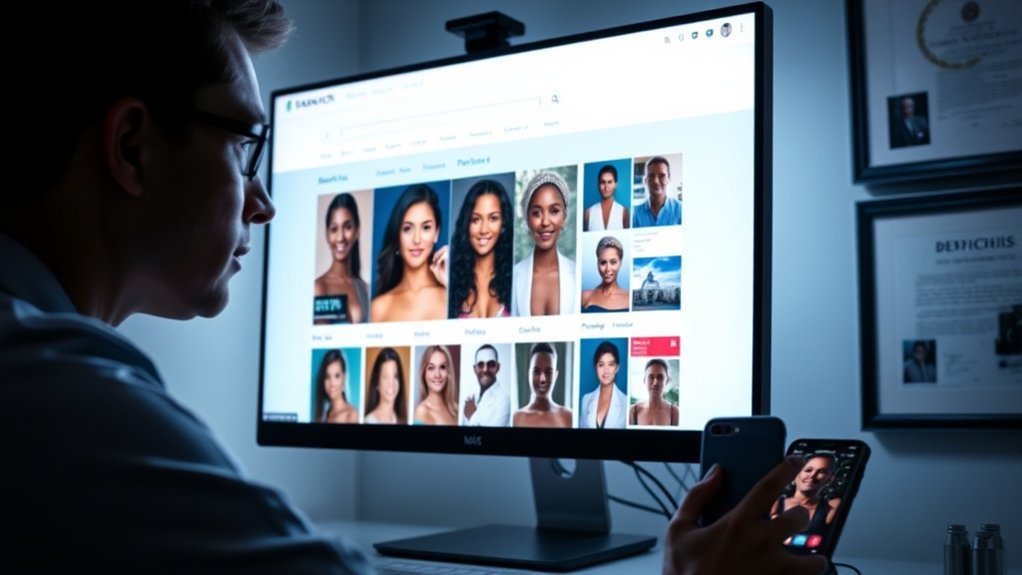
When a patient searches for a plastic surgeon today, they’re increasingly skipping Google’s blue links entirely and turning to AI-driven tools like ChatGPT, Perplexity, or Gemini for curated, conversational recommendations.
This shift in patient behavior represents a fundamental search evolution—one that’s rewriting how practices get revealed.
Instead of clicking through multiple websites, patients now receive direct, AI-generated surgeon recommendations before they ever visit your site.
That means your traditional website visibility strategy may no longer be enough. If your practice isn’t appearing in AI-curated results, you’re effectively invisible to a growing segment of prospective patients.
This isn’t a future trend—it’s happening now. Understanding how AI surfaces recommendations is the first step toward adapting your patient acquisition strategy effectively.
Why Your Website Alone No Longer Guarantees AI Search Visibility
AI prioritizes these three signals over traditional website optimization:
- Google Business Profile activity — Consistent updates and fresh patient reviews signal relevance to AI summaries.
- Structured data quality — Well-organized FAQs and sentiment-rich reviews improve findability across AI-driven results.
- Third-party directory visibility — AI frequently sources recommendations from high-authority review platforms, not practice websites.
Practices relying solely on their website risk invisibility where patients are actually searching.
Your digital strategy must expand beyond your site to stay competitive.
What AI Actually Measures When It Evaluates a Surgeon
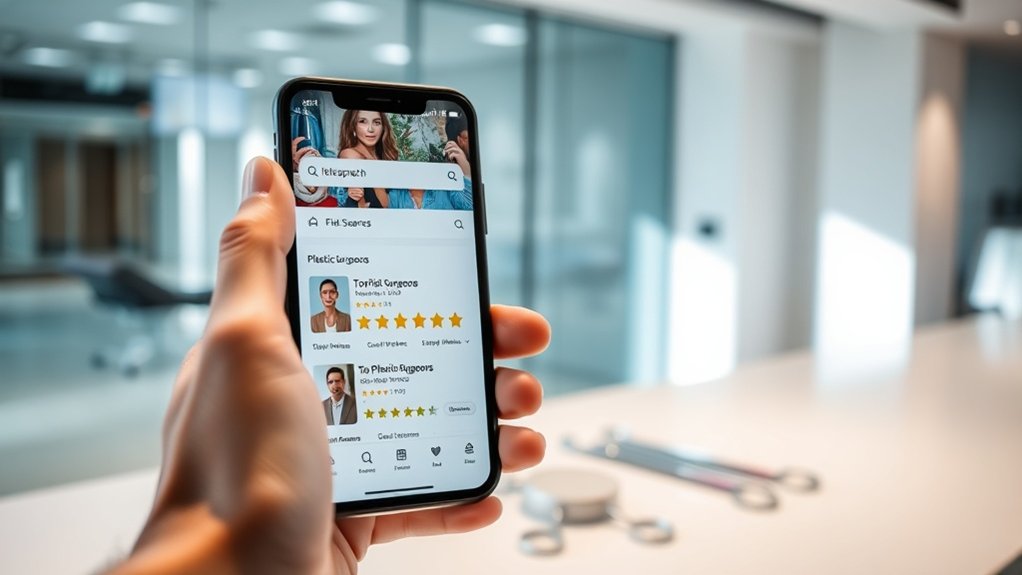
Understanding what AI actually measures puts you one step ahead of competitors still optimizing for outdated ranking signals.
AI doesn’t simply count five-star ratings—it analyzes review authenticity, recency, and specificity to determine whether your reputation reflects genuine patient outcomes.
Structured content matters greatly.
AI models parse tagged, formatted information more efficiently than unstructured text, meaning how your content is organized directly affects your visibility.
Engagement metrics also carry real weight.
Your response rate to patient feedback, overall sentiment patterns, and consistency across platforms like Google Business Profiles and medical directories all signal credibility to AI algorithms.
Think of AI evaluation as a multi-source audit happening in real time.
Every digital touchpoint you maintain—or neglect—actively shapes how AI ranks and presents you to prospective patients.
How Patient Reviews Now Drive AI Discoverability
Patient reviews have moved far beyond social proof—they’re now core data inputs that AI models actively parse to determine your visibility in search results.
Your review strategies must account for three AI-driven factors:
- Quantity and recency – AI prioritizes fresh, frequent feedback over outdated volume.
- Specificity and sentiment – Structured, detail-rich reviews signal relevance, helping AI accurately summarize your practice.
- Response activity – Responding to reviews demonstrates active patient engagement, which AI interprets as a trust indicator.
Practices with higher volumes of structured reviews consistently appear in AI-generated summaries, directly shaping patient choices before they ever visit your website.
Update your Google Business Profile regularly and treat every review as a strategic asset, not an afterthought.
How to Structure Your Content So AI Reads and Recommends It

Reviews signal trust to AI—but content structure determines whether AI can actually read, parse, and recommend your practice. If your website lacks clear content hierarchy, AI algorithms struggle to extract and surface relevant information.
Start with structured FAQs that directly address patient concerns—questions about procedures, recovery, and outcomes. This format makes your content scannable and retrieval-friendly.
Pair that with intentional keyword optimization so AI understands your specialties and service relevance.
Add schema markup to give AI the contextual signals it needs to feature your practice in generated summaries. Every page should serve a specific informational purpose, organized logically from broad topics to specific answers.
Practices that combine structured content with strong keyword optimization don’t just rank—they get recommended by AI where patients are actively searching.
Five Steps to Protect Your Visibility as AI Search Takes Over
Protecting your visibility in AI search isn’t optional anymore—it’s a competitive necessity. Your online reputation directly influences whether AI tools recommend you or your competitor. Content optimization guarantees AI reads, trusts, and surfaces your practice first.
Start with these three high-impact actions:
- Update your Google Business Profile regularly with accurate, structured information AI systems can easily parse and cite.
- Encourage structured, sentiment-rich patient reviews on Google, Healthgrades, and Vitals to strengthen your visibility in AI-generated summaries.
- Audit directory listings for consistency across every platform, eliminating data conflicts that push competitors ahead of you.
Additionally, build FAQ-driven content and actively monitor AI citations to stay ahead as search behavior continues shifting.
Why AI Search Strategy for Plastic Surgeons Requires Specialty Expertise

Plastic surgery isn’t general medicine, and AI search engines are increasingly smart enough to know the difference. Most AI applications in this space focus on patient education and clinical decision support, meaning generic content strategies won’t cut it.
You need expertise integration—combining your surgical knowledge with data scientists and digital marketers who understand how AI parses specialty-specific information.
Data standardization is similarly non-negotiable. AI systems favor structured, consistently formatted content. When your patient reviews, procedure descriptions, and clinical insights follow uniform tagging conventions, AI engines can accurately surface your practice in relevant searches.
A multidisciplinary team guarantees your content reflects both medical authority and technical findability—positioning you precisely where high-intent patients are already searching.
Frequently Asked Questions
How Long Does It Take to See Results From AI Search Optimization?
While it won’t happen overnight, you’ll typically see search ranking improvements within 3-6 months. Consistently aligning your content with patient preferences accelerates AI-driven visibility, converting more searches into consultations faster than traditional SEO methods.
Can Smaller Plastic Surgery Practices Compete With Larger Ones in AI Search?
Yes, you can compete! By influencing local visibility, building patient trust through authentic content, conducting competitive analysis, and executing targeted digital marketing, your smaller practice can outperform larger ones in AI-driven search results.
Does AI Search Affect Paid Advertising Strategies for Plastic Surgeons?
Like a compass recalibrating, AI search shifts your ad budget priorities. You’ll need stronger local targeting since AI handles broad inquiries, so focus your paid spend on high-intent, procedure-specific terms that convert browsers into booked consultations.
Are Certain Plastic Surgery Procedures More Discoverable Through AI Search?
Yes, procedure popularity directly impacts your AI search visibility. You’ll find high-demand treatments like rhinoplasty and facelifts gain stronger AI-driven visibility, so prioritize keyword targeting around trending procedures to maximize your conversion potential across channels.
How Does AI Search Handle Multilingual Content for Diverse Patient Populations?
AI search prioritizes multilingual optimization by matching content to users’ native languages. You’ll reach more diverse patients by creating culturally relevant content that reflects their values, boosting visibility and driving conversions across all communities you serve.