
Your plastic surgery landing pages need singular focus—one procedure, one clear conversion goal—with message match between your ads and page content to prevent prospect confusion. You’ll maximize conversions by implementing fast-loading mobile-responsive designs, simplifyd 3-5 field forms, and prominent HIPAA-compliant CTAs that guide patients toward consultations. Build immediate trust through board certifications, authentic testimonials, and before-and-after galleries while systematically A/B testing headlines and visuals to identify what resonates with your specific patient demographics. The strategies below reveal how to transform underperforming pages into consultation-generating assets.
Landing Page Fundamentals: Single Goal, Message Match, and Scent Trail Consistency
When potential patients click on your plastic surgery ad, they’re making a split-second decision about whether you’re worth their time—and your landing page determines that outcome. Your page must have a single goal—whether that’s booking a consultation or downloading a guide—to eliminate distractions and drive conversions above 30%.
Message match is non-negotiable. If your ad promises rhinoplasty results, your landing page must immediately reinforce that specific procedure with matching headlines and imagery. This consistency reduces bounce rates and builds trust.
Maintain scent trail consistency by confirming your design, language, and calls-to-action flow smoothly from ad to page. This cohesive user experience keeps prospects engaged and converts clicks into qualified leads while maintaining HIPAA-compliant tracking practices.
Strategic Structure and Essential Elements for High-Converting Landing Pages
Every element on your landing page must earn its place by driving conversions or building trust—anything else costs you patients.
Structure your page with a results-focused headline that immediately communicates procedure benefits. Position high-quality visuals strategically—before-and-after photos prove your expertise while professional team images humanize your practice.
You’ll maximize conversions by explaining procedures in accessible language that addresses patient concerns without medical jargon.
Place prominent calls to action throughout your landing pages, using action-oriented language like “Schedule Your Consultation” rather than passive phrases.
Track conversion rates and bounce rates continuously to identify optimization opportunities. Each metric reveals where visitors engage or abandon.
This data-driven approach guarantees your landing pages generate measurable ROI while maintaining HIPAA compliance in all visual content and patient testimonials.
Creating Procedure-Specific Landing Pages That Resonate With Patient Intent
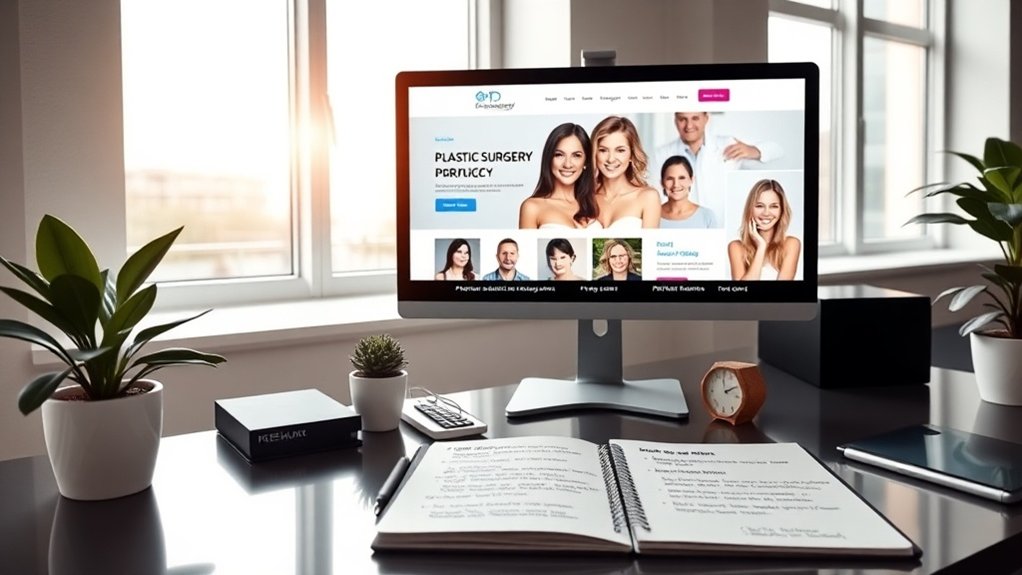
Why do most plastic surgery landing pages fail to convert qualified leads? They’re speaking to everyone instead of addressing individual patient intent.
You’ll see dramatic improvement by creating dedicated procedure pages for each surgery you offer. When someone searches “breast augmentation,” they’re looking for specific answers about that procedure—not generic information about your practice.
Your procedure pages must include detailed treatment descriptions, before-and-after photos, and patient testimonials that speak directly to each surgery’s unique outcomes.
Location-based keywords improve local search visibility, while strong calls to action guide visitors toward booking consultations.
Don’t guess what works—A/B test headlines, visuals, and CTAs regularly. This data-driven approach guarantees you’re maximizing conversions while maintaining HIPAA compliance throughout your optimization efforts.
Optimizing Conversion Elements: Forms, CTAs, and Contact Options
While your procedure pages attract qualified visitors, conversion elements determine whether they become paying patients. Your forms should contain only 3-5 fields—fewer fields dramatically increase completion rates while capturing essential contact information.
Position clear calls to action throughout each page using action-oriented language like “Schedule Your Free Consultation Today!” to drive immediate response.
Provide multiple contact options including clickable phone numbers and live chat features, accommodating different communication preferences. A/B test various placements and messaging to identify what converts best for your specific audience.
Emphasize completion benefits: exclusive offers, personalized consultations, or expert advice access. These value propositions motivate prospects to act while reinforcing why your practice stands out.
Building Trust and Credibility Through Surgeon Credentials and Social Proof
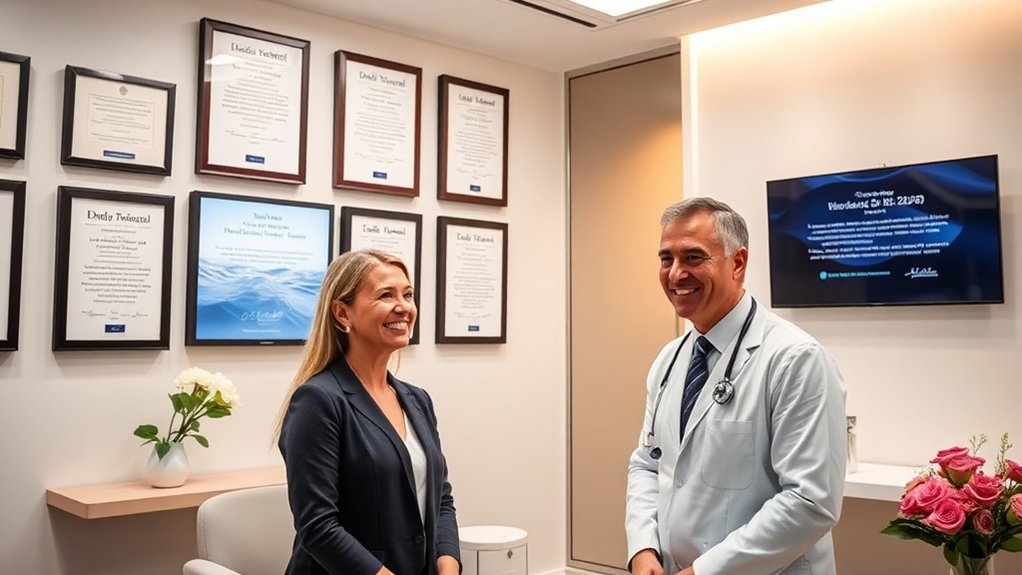
Because plastic surgery represents both a significant financial investment and personal decision, prospective patients scrutinize credentials before scheduling consultations.
Your landing page must strategically showcase surgeon credentials and social proof to convert visitors into leads.
Implement these trust-building elements:
- Display board certifications prominently – ASPS membership and specialty certifications validate expertise
- Feature authentic patient testimonials – 84% of prospects trust online reviews as much as personal recommendations
- Showcase before-and-after galleries – Visual proof demonstrates surgical skill and sets realistic expectations
- Provide detailed surgeon biographies – Education, training, and experience reassure patients about safety standards
- Respond to all reviews actively – Engagement demonstrates commitment to patient satisfaction and accountability
These credential-focused elements reduce decision friction, increase perceived value, and directly impact conversion rates while maintaining HIPAA compliance.
Mobile Optimization and Technical Performance for Smooth User Experience
Your mobile landing page’s technical performance directly impacts your bottom line—60% of plastic surgery searches happen on mobile devices, and you’re losing 7% of potential conversions for every second your page takes to load.
You’ll maximize patient inquiries by implementing responsive design that adapts smoothly across all devices, optimizing your loading speed to under three seconds, and creating touch-friendly navigation that guides prospects effortlessly toward consultation bookings.
These technical elements work together to reduce bounce rates while keeping your practice compliant with healthcare marketing standards and user experience best practices.
Responsive Design Across Devices
How much revenue is your practice losing when potential patients can’t guide your landing page on their smartphones?
With over 60% of local searches happening on mobile devices, responsive design isn’t optional—it’s crucial for your bottom line.
Your mobile optimization strategy must deliver smooth user experience across all devices:
- Automatic screen adjustments guarantee your content displays perfectly on smartphones, tablets, and desktops
- Loading speeds under 3 seconds prevent the 40% engagement drop that kills conversions
- Click-to-call buttons eliminate friction between interest and appointment booking
- Optimized images and minimal code maintain Google’s ranking requirements
- Regular mobile testing catches functionality issues before they cost you patients
Every second of load time and every navigation obstacle directly impacts your patient acquisition rates and practice revenue.
Fast Loading Speed Optimization
Every millisecond counts when potential patients evaluate your practice online—and the data proves it. With 53% of mobile users abandoning sites exceeding three-second load times, fast loading speed directly impacts your conversion rates and revenue.
Optimize your mobile optimization strategy by compressing images and minimizing code to deliver superior user experience. Implement these proven tactics:
| Optimization Strategy | Impact on Performance |
|---|---|
| Image compression & lazy loading | Reduces initial load time by 40-60% |
| Minimized CSS/JavaScript | Decreases code bloat, faster rendering |
| Click-to-call buttons | Increases consultation bookings by 27% |
Use Google’s PageSpeed Insights to identify bottlenecks and receive actionable recommendations. Regular audits for broken links and outdated content guarantee consistent performance. Remember: faster pages don’t just improve rankings—they convert hesitant visitors into booked consultations.
When mobile users can’t tap your consultation buttons on the first try, they’re already evaluating your competitor’s practice.
Touch-friendly navigation directly impacts your conversion rates, with proper mobile optimization reducing bounce rates from 70% to sustainable levels. Since 60% of local searches happen on mobile devices, your navigation elements must facilitate immediate action.
Essential Touch-Friendly Navigation Requirements:
- Design all buttons and links at minimum 44 pixels wide for accurate tapping
- Implement sticky navigation bars for constant access to booking and contact options
- Space interactive elements adequately to prevent accidental clicks and user frustration
- Test navigation functionality across multiple device sizes and operating systems
- Monitor analytics to identify navigation pain points affecting user experience
Regular testing through user feedback guarantees your mobile optimization supports smooth patient acquisition while maintaining HIPAA-compliant functionality.
Testing, Tracking, and Continuous Improvement of Landing Page Performance
Because your landing page represents a significant investment in patient acquisition, systematic testing and tracking become non-negotiable components of your digital strategy.
Implement A/B testing on headlines, visuals, and call-to-action buttons—even minor adjustments can boost conversions by 30%. Use Google Analytics to monitor bounce rates, conversion paths, and user behavior patterns while making certain HIPAA-compliant tracking configurations.
Use heatmaps to visualize exactly where prospective patients engage and where they lose interest. This continuous improvement approach transforms data into actionable insights.
For instance, a 10% improvement in loading speed typically yields a 7% conversion increase. Review your metrics weekly, identifying trends that reveal patient preferences.
Testing, tracking, and refining your landing page systematically maximizes ROI while building a compliant, conversion-optimized patient acquisition system.