

Your plastic surgery practice’s on-page SEO converts when you combine technical precision with trust-building elements. You’ll need title tags under 60 characters, meta descriptions at 150-160 characters, and service pages exceeding 1,500 words with semantic keywords. Implement LocalBusiness schema markup, compress images by 80%, and maintain page load speeds under 2 seconds. Display credentials prominently, optimize header hierarchy with strategic keyword placement, and create intuitive internal linking architecture. These foundational elements work together to capture qualified patient inquiries, and the implementation details below reveal how each component amplifies your conversion potential.
E-E-A-T Optimization: Building Trust and Authority on Your Plastic Surgery Website
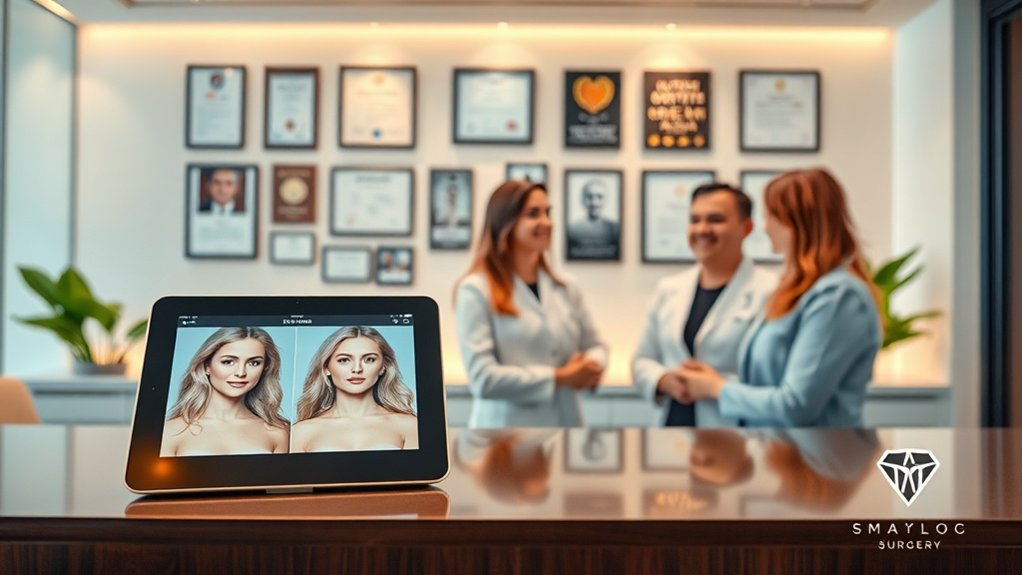
When patients search for plastic surgery procedures online, they’re not just looking for information—they’re evaluating whether they can trust you with one of the most personal decisions they’ll make.
That’s where E-E-A-T optimization becomes essential for your plastic surgery website.
Building trustworthiness starts with prominently displaying your credentials, certifications, and listings in medical directories. This establishes your expertise and authority immediately.
Strengthen your site’s credibility by featuring patient testimonials and positive reviews that provide authentic social proof.
Content optimization matters too. Publish detailed, well-researched procedure guides that answer common questions while demonstrating your medical knowledge.
Regular updates about industry trends reinforce your authority. Together, these elements improve user experience and signal to both search engines and potential patients that you’re a trusted choice.
Crafting High-Converting Title Tags and Meta Descriptions for Procedure Pages
Your procedure pages might rank well organically, but if searchers don’t click through to your site, that visibility means nothing. Optimizing title tags and meta descriptions is essential for plastic surgery practices to boost click-through rate and patient engagement.
| Element | Best Practice | Example | |
|---|---|---|---|
| Title Tags | 50-60 characters with primary keywords | “Breast Augmentation in Miami | Board-Certified” |
| Meta Descriptions | 150-160 characters summarizing benefits | “Transform your confidence with expert breast augmentation. Schedule your consultation today.” | |
| Call-to-Action | Include clear, action-oriented language | “Book Now,” “Schedule Consultation,” “Learn More” |
Well-crafted title tags and meta descriptions incorporating relevant keywords can improve your click-through rate by 30%. Regular updates based on performance data guarantee your procedure pages remain high-converting and competitive.
Strategic Header Hierarchy and Keyword Placement for Maximum SEO Impact
Once visitors click through to your procedure pages, search engines need clear signals about your content’s structure and relevance.
Strategic header hierarchy organizes your content through H1, H2, and H3 tags, directly improving SEO performance. Place primary keywords in your H1 tag to establish the page’s focus, then distribute secondary terms across H2 and H3 subheadings.
Keyword placement matters notably—include target terms within your first 100 words to signal relevance. Search engines prioritize early-content keywords when ranking high in results.
Your meta titles should incorporate procedure-specific keywords while remaining descriptive, increasing click-through rates from search results.
For plastic surgery practices, this systematic approach improves user engagement while communicating topical authority.
Review your header structure and keyword distribution quarterly, adjusting based on analytics to maintain competitive rankings.
Content Depth Requirements and Semantic Keyword Integration by Page Type
Because search engines prioritize thorough content that answers patient questions thoroughly, plastic surgery pages need substantial depth to compete effectively.
Your service pages require minimum 1,500 words with extensive information about procedures, recovery timelines, and patient testimonials to boost conversion rates.
Semantic keyword integration throughout content helps search engines understand relevance while improving SEO performance across multiple inquiries.
For blog posts, target long-tail keywords addressing specific patient concerns to attract qualified traffic and establish expertise.
Strategic header tags (H1, H2, H3) organize content for ideal user experience while enabling keyword placement opportunities.
Each page type demands different content depth requirements—service pages need procedural details, while educational content should thoroughly address common questions.
This approach balances informative value with search visibility, ultimately driving patient inquiries.
Image Optimization and Schema Markup Implementation for Improved Visibility

Your practice’s visual content can considerably impact both page performance and local search visibility when properly optimized.
Compressing images before upload maintains quality while dramatically improving load times—a factor that directly affects your rankings and conversion rates.
Implementing LocalBusiness schema markup provides search engines with structured data about your practice, increasing your chances of appearing in Google’s Local Pack and rich search results where potential patients are actively looking for cosmetic procedures.
Compress Images for Speed
Image compression stands as one of the most impactful yet overlooked elements of plastic surgery website optimization. When you compress images for speed, you’ll reduce page load times by up to 80% using tools like TinyPNG or ImageOptim—without sacrificing visual quality.
This directly improves user experience and can boost conversion rates by 70%.
Beyond compression, you’ll improve SEO performance by implementing descriptive file names and alt text that incorporate relevant keywords. These elements work alongside schema markup to help search engines understand your visual content, improving website speed scores that Google prioritizes in its ranking algorithms.
The result? Higher search engine placements, increased visibility, and more qualified patients finding your practice through optimized image optimization strategies that convert browsers into consultations.
Implement LocalBusiness Schema Markup
When search engines crawl your plastic surgery website, they’re looking for clear signals about who you are, where you practice, and what services you offer—and LocalBusiness schema markup provides exactly that structured data.
This code helps your plastic surgery practice appear in local search results and Google’s Local Pack, directly connecting you with potential patients searching for your services.
Schema markup improves your search engine results with rich snippets displaying reviews, ratings, and operating hours. Studies show this can boost click-through rates by 30%, greatly increasing online visibility.
Combined with image optimization—using relevant alt text and proper file naming—you’ll maximize SEO performance across all content types.
Audit your schema markup quarterly to maintain compliance with evolving standards and sustain your competitive advantage in local searches.
Internal Linking Architecture and User Experience Signals That Drive Conversions
Your internal linking structure acts as a roadmap that guides potential patients from initial research to booking consultations, directly impacting your conversion rates.
When you strategically connect procedure pages, before-and-after galleries, and testimonials with contextual anchor text, you’re reducing friction in the decision-making journey while signaling content relevance to search engines.
The user experience metrics that result—lower bounce rates, extended session durations, and increased page depth—serve as powerful ranking factors that amplify your practice’s visibility in competitive plastic surgery markets.
Strategic Internal Link Structure
Because your plastic surgery website functions as a digital patient journey rather than a static brochure, strategic internal linking transforms casual browsers into consultation bookings.
You’ll boost SEO performance by connecting procedure pages to relevant before-and-after galleries, surgeon credentials, and patient testimonials. These internal links distribute site authority from high-performing pages to conversion-focused content, improving search rankings and website visibility.
Descriptive anchor text like “breast augmentation recovery timeline” helps search engines understand context while guiding users toward decision-making resources.
You’re creating natural pathways that increase content engagement and reduce bounce rates—both critical user experience signals. Regular audits guarantee your links remain functional and relevant, supporting ongoing SEO efforts.
This architecture doesn’t just improve rankings; it strategically nurtures prospects through trust-building content that increases conversion rates.
UX Metrics Impact Conversions
While search rankings attract visitors to your plastic surgery website, conversion rates depend on the milliseconds after they arrive. User experience metrics directly determine whether website traffic transforms into patient bookings.
Page load speed under 2 seconds prevents abandonment, while strategic internal linking guides prospects through your service offerings. Clear navigation enables potential patients to access information effortlessly, driving lead generation for plastic surgery practices.
Critical UX elements that maximize conversions:
- Page load speed optimization delivers 15% higher conversion rates
- Strategic internal linking contributes to 53% of total website traffic
- Intuitive navigation increases completed contact forms by 50%
- Engaging content paired with internal links boosts click-through rates by 30%
- Reduced bounce rates (up to 70% improvement) signal quality to search engines
These user experience signals work synergistically, transforming visitors into consultations.