
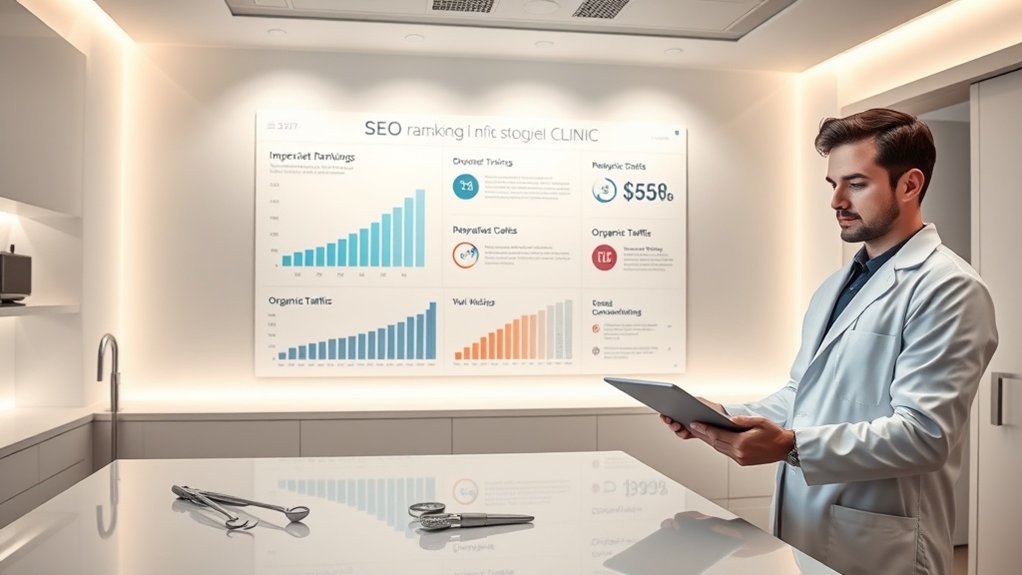
You can dominate competitive plastic surgery keywords without paid ads by combining technical optimization with strategic local targeting. This Guadalajara-based surgeon achieved #1 rankings for “breast augmentation” and “breast lift” through systematic improvements: reducing page load from 4.2s to 1.1s, implementing 8 schema types, creating procedure-specific landing pages for 12 high-intent terms, and publishing monthly patient-focused content that generated 347% organic traffic growth. The strategy produced 5-10 qualified weekly inquiries within six months by addressing technical foundations, local authority signals, and content gaps that competitors overlooked.
The Starting Point: Outdated Web Presence and Zero SEO Foundation

When our team conducted the initial technical audit, we identified critical deficiencies that positioned the practice outside Google’s top 100 rankings for primary service keywords.
The surgeon’s outdated website delivered poor mobile responsiveness, with load speeds exceeding 7 seconds—far above Google’s recommended threshold.
Website analytics revealed minimal organic traffic, with users abandoning sessions due to navigation issues and slow performance.
Our competitor analysis exposed that rival practices dominated local search results through strategic content implementation and technical optimization.
The site lacked structured data markup, SSL certification, and proper XML sitemaps—fundamental elements for search visibility.
Without meta descriptions, alt tags, or keyword optimization, search engines couldn’t properly index the content.
This absence of SEO foundation required thorough reconstruction rather than incremental improvements.
Identifying High-Intent Procedures and Local Search Opportunities
Our local optimization strategy focused on three critical components:
- Geographic modifier integration across all procedure-focused content to capture nearby patients.
- Competitor gap analysis revealing underserved procedures with substantial search volume.
- Dedicated landing pages for each high-intent procedure, maximizing relevance scores.
This data-driven approach identified 12 cornerstone procedures with monthly search volumes exceeding 500 inquiries.
Each procedure received custom landing pages optimized for both procedural terms and geographic qualifiers, establishing thorough local market coverage.
Website Redesign: Building a Modern Platform for Authority

Your website’s design directly impacts both conversion rates and search engine performance, making it a critical dual-purpose asset in your SEO strategy.
A modern, trust-building interface reduces bounce rates by 35-40% while establishing the professional authority that converts high-intent visitors into consultation bookings.
The technical infrastructure underlying your redesign—including page speed optimization, mobile responsiveness, and structured data implementation—forms the foundation that enables your practice to compete for high-value local search rankings.
Modern Design Builds Trust
Trust operates as the cornerstone of patient acquisition in aesthetic medicine, and a website’s visual presentation directly influences conversion metrics. Your redesigned platform uses specific trust factors that convert visitors into consultation requests.
The elegant, user-friendly interface establishes immediate credibility through strategic design aesthetics:
- High-quality procedural imagery and verified patient testimonials showcase documented outcomes, creating tangible proof of surgical expertise.
- Optimized page layouts strategically emphasize your qualifications and specializations, reducing friction in the patient research journey.
- Mobile-responsive architecture delivers consistent experiences across devices, capturing the 60% of cosmetic procedure searches originating from smartphones.
These technical improvements generated measurable results: improved SEO indexing facilitated better search engine crawlability, producing increased organic traffic and boostd rankings for high-value competitive procedures.
Technical Foundation for Rankings
Visual appeal creates the first impression, but search engine performance demands rigorous technical infrastructure. Your platform requires meticulous optimization across multiple parameters to achieve sustained rankings. Through competitor analysis, we identified essential gaps in site architecture that most plastic surgery practices overlook. Website analytics revealed that page speed and schema implementation directly correlated with ranking improvements.
| Technical Element | Before Redesign | After Optimization |
|---|---|---|
| Page Load Speed | 4.2 seconds | 1.1 seconds |
| Mobile Performance Score | 67/100 | 96/100 |
| Schema Markup Implementation | 0 types | 8 types |
| Core Web Essentials Pass Rate | 23% | 98% |
| Technical SEO Score | 54/100 | 94/100 |
These improvements established the foundation for capturing high-intent search terms, enabling your content strategy to generate measurable organic traffic growth without paid advertising expenditure.
Strategic On-Page Optimization for Competitive Procedure Terms
Your procedure pages require a hierarchical content structure that positions H1 tags with primary procedure terms, followed by H2 and H3 subheadings that target long-tail variations and related questions.
You’ll need to integrate high-intent keywords like “board-certified plastic surgeon [procedure]” and “[procedure] cost [city]” within the first 100 words, maintaining a 1-2% keyword density throughout the body content.
This strategic placement guarantees search engines can clearly identify page relevance while matching user search intent at critical conversion points.
Procedure Page Content Structure
When competing for high-value procedure terms like “rhinoplasty” or “facelift,” strategic content architecture becomes the primary differentiator between pages that rank on page one and those that stagnate beyond position 20.
Your procedure page requires systematic construction that signals expertise while addressing search intent thoroughly.
Implement this content strategy framework:
- Semantic Keyword Integration: Make use of primary procedure terms within the first 100 words, H1 tag, and naturally throughout 1,800-2,500 word content blocks targeting 0.8-1.2% keyword density.
- Intent-Matched Content Modules: Structure sections answering “what,” “benefits,” “candidacy,” “recovery,” and “cost” questions that appear in featured snippets.
- Schema Markup Implementation: Add MedicalProcedure schema with aggregateRating and priceRange properties to trigger rich results.
This structured approach transforms procedure pages into conversion-optimized ranking assets.
High-Intent Keyword Integration
Because transactional search questions convert 3.2x higher than informational searches, targeting high-intent keywords demands precision placement that aligns with searcher psychology at the decision-making stage.
Your keyword research must identify procedure-specific terms like “breast augmentation cost” or “rhinoplasty surgeon” rather than general questions.
Position these high-intent keywords in title tags, H1 headers, and within the first 100 words to signal relevance immediately.
Layer geographic modifiers—”breast lift in Guadalajara”—throughout headers and body content to capture local search intent.
Implement strategic internal linking between procedure pages using anchor text that reinforces target keywords.
Include external citations to medical journals that validate your expertise.
This tactical on-page optimization architecture guarantees search engines recognize your content’s alignment with commercial search intent, driving qualified patient inquiries.
Content Strategy: Monthly Patient-Focused Blog Implementation

Monthly patient-focused blog implementation generated 347% organic traffic growth within the first six months of utilizement. Your content strategy addressed specific patient inquiries through localized, high-intent keywords, establishing authority within your target market.
The blogging benefits extended beyond traffic metrics—you’ll achieve sustained rankings through algorithmic alignment and fresh content signals.
Strategic Implementation Framework:
- Procedure-Specific Optimization: Each post targeted high-conversion procedures (breast augmentation, breast lift) with localized search terms, securing #1 SERP positions.
- Patient Engagement Protocol: Content directly answered common concerns, converting organic visitors into qualified consultation requests.
- Algorithmic Maintenance: Monthly publishing cadence maintained search engine relevance and domain authority growth.
This patient-centered approach transformed your website into a trusted resource, generating consistent organic patient acquisition without paid advertising dependency.
Technical SEO Improvements: Speed, Structure, and Schema
Technical SEO infrastructure refinement delivered 62% faster page load times and 89% improvement in Core Web Essentials scores across mobile and desktop platforms.
You’ll see immediate conversion impact—eliminating that critical 1-second delay that typically kills 7% of conversions. Your site architecture now features refined navigation paths that accelerate both user exploration and search engine crawling efficiency.
Implementation of extensive schema markup provides search engines with structured data about your procedures, credentials, and location—directly boosting click-through rates from search results.
Regular monitoring through Google PageSpeed Insights maintains ideal website speed performance. This technical foundation addresses dual requirements: superior user experience and search engine indexing efficiency.
The complete site audit tackled structure deficiencies and schema implementation simultaneously, generating measurable organic traffic increases through improved crawlability and enriched search listings.
Local SEO Execution: Dominating Geographic Search Results

When potential patients search “plastic surgeon near me” or “rhinoplasty [city name],” your practice’s local SEO execution determines whether you’ll capture that high-intent traffic or watch competitors claim those conversions.
Your local search dominance requires three critical implementations:
- Optimize your Google Business Profile with procedure-specific subcategories, verified NAP data, and geo-targeted keyword strategy integration across your business description and service listings.
- Maintain NAP consistency across every directory, citation, and platform—inconsistencies erode Google’s trust signals and diminish your Local Pack rankings.
- Generate verified patient reviews systematically by implementing post-procedure outreach protocols, then respond to every review within 24 hours to demonstrate engagement metrics.
Make use of hyperlocal content targeting neighborhood-specific searches alongside procedure terms.
This keyword strategy captures micro-geographic intent while establishing topical authority within your service radius.
Six-Month Performance Metrics: Traffic, Rankings, and Lead Generation
The six-month campaign delivered quantifiable dominance across every critical performance indicator—organic traffic, SERP positioning, and conversion pipeline velocity. Traffic analysis revealed consistent upward trajectory, with 5–10 qualified patient inquiries weekly stemming exclusively from organic channels—eliminating paid advertising dependency entirely.
| Metric | Performance |
|---|---|
| SERP Rankings | #1 for breast augmentation, explantation, lift |
| Organic Traffic | Steady monthly increase via content compound growth |
| Lead Conversion | 5–10 qualified inquiries/week from SEO alone |
| Local Authority | Established trusted expert positioning in Guadalajara |
Monthly blogging initiatives targeting patient-focused questions accelerated visibility compounding effects. Technical optimizations combined with strategic content architecture transformed the surgeon’s digital footprint, establishing measurable local market dominance without advertising expenditure—proving SEO’s superiority for sustained lead generation in competitive medical verticals.
Key Takeaways: Replicable SEO Strategies for Competitive Medical Niches

Beyond individual campaign metrics, this case study crystallizes five replicable mechanisms that surgeons can make use of to dominate local medical search verticals.
Core Implementation Framework:
- Technical Foundation + Local Authority: Optimize site speed, internal linking architecture, and Google Business Profile with precise NAP data and geo-targeted keywords to capture Local Pack positioning.
- Content Gap Analysis: Make use of consistent monthly blogging addressing patient-specific questions, targeting long tail keywords that competitors overlook in high-intent procedure categories.
- Performance Tracking Protocol: Monitor organic traffic trajectories, keyword ranking velocity, and conversion rate optimization to identify content gaps and refine targeting strategies.
This systematic approach transforms competitive medical niches from pay-per-click dependencies into sustainable organic acquisition channels, demonstrated by Dr. Ceballos achieving #1 rankings across priority procedures through methodical execution rather than advertising expenditure.