

Your plastic surgery SEO strategy must align with how your practice actually operates. Boutique practices convert at 3.4x higher rates using niche, emotionally resonant keywords and precision local SEO signals, while high-volume clinics rely on broad keyword reach and geographic targeting to drive traffic at scale. Patient positioning, content architecture, link building, and lead qualification all shift considerably depending on your model. Keep going to see exactly what needs to change for yours.
Boutique vs. High-Volume: Why Your Business Model Shapes Your SEO
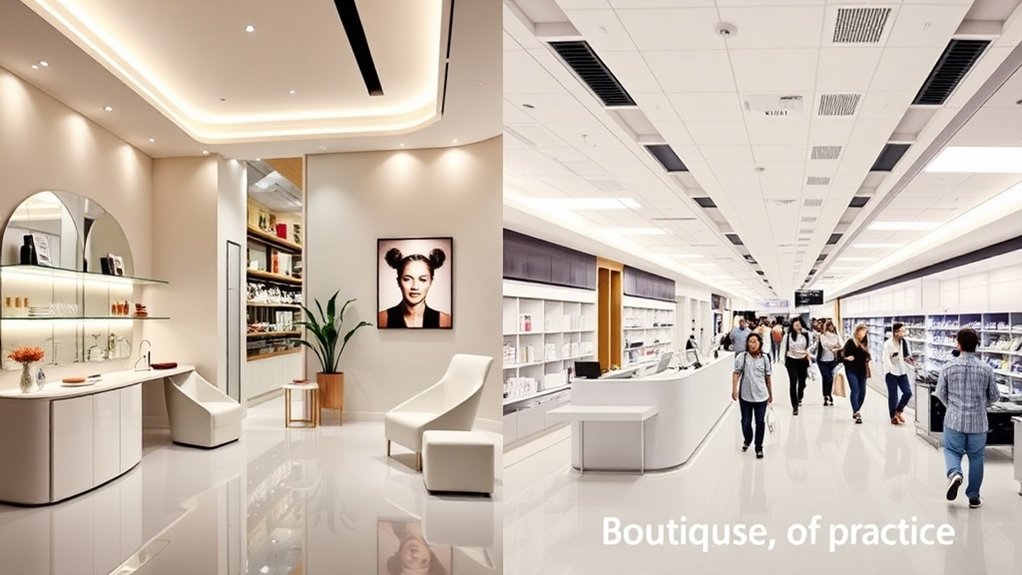
Whether you run an intimate boutique practice or a bustling high-volume clinic, your business model directly dictates your SEO strategy—and treating them as interchangeable is a costly mistake.
Your target demographics, content approach, and technical requirements differ fundamentally.
Boutique practices thrive through niche marketing, content personalization, and brand differentiation—targeting long-tail keywords that attract highly specific patients.
Your competitive analysis should focus on local authority, not volume. Prioritizing patient experience means crafting tailored content that resonates deeply with a defined audience.
High-volume clinics, however, need broader keyword strategies and robust technical SEO to sustain heavy traffic.
Audience engagement here means scaling visibility across multiple platforms while maintaining consistency.
Understanding which model you operate determines where you invest, what you optimize, and how you convert.
How Patient Positioning Shapes SEO Keyword Targeting Across Practice Types
Your practice’s patient positioning directly determines which keywords you should target—boutique practices convert at 3.4x higher rates by focusing on niche, procedure-specific terms that attract decision-ready patients, while high-volume clinics prioritize broad, high-traffic keywords to maximize reach.
Positioning shapes search intent, meaning the language your ideal patient uses at each stage of their decision-making journey must align with your keyword strategy.
Whether you’re targeting early-stage researchers or patients ready to book, your keyword selection signals authority, filters patient fit, and ultimately drives the conversions that match your business model.
Boutique vs. Volume Keywords
The type of practice you run should directly determine how you build your keyword strategy—and the data backs this up. Boutique practices that lean into niche targeting—think “luxury breast augmentation in [city]”—see 3.4x higher conversion rates than those using generic terms.
That’s not coincidence; it’s keyword differentiation working exactly as intended.
High-volume clinics, by contrast, compete on broader, cost-driven terms like “affordable plastic surgery,” prioritizing search volume over specificity. Each approach reflects a deliberate positioning choice.
Boutique practices integrate emotional and aesthetic language—exclusivity, bespoke care, personalized results—because that’s what their ideal patients are searching for.
High-volume clinics target accessibility. Competitor analysis in local markets helps both identify gaps, but what you’re looking for depends entirely on who you’re trying to reach.
Positioning Drives Search Intent
How you position your practice isn’t just a branding decision—it’s the upstream variable that determines which keywords will actually convert. Patient emotions shape search behavior differently depending on whether someone wants exclusivity or affordability. Boutique practices win through keyword nuances—targeting user intent that reflects transformation, trust, and personalization. High-volume clinics prioritize reach over depth.
| Positioning Factor | Impact on SEO |
|---|---|
| Brand storytelling | Drives niche targeting through emotional keywords |
| Content personalization | Aligns with specific user intent |
| Engagement strategies | Reduces bounce rates on targeted pages |
| Patient emotions | Shapes long-tail keyword selection |
| Search behavior patterns | Informs content architecture |
Your positioning dictates whether you’re attracting browsers or buyers. Match your keyword strategy to your practice identity—precision always outperforms volume when conversions matter.
Targeting Patient Decision Stages
Patients don’t search the same way at every stage of their decision journey—and your keyword strategy needs to reflect that. Understanding patient motivations and search behavior lets you align keyword relevance with where prospects actually are mentally.
Boutique practices benefit from intent analysis that targets high-intent phrases like “custom breast augmentation,” reaching patients whose decision factors prioritize personalized care. Content personalization through in-depth blog posts reinforces service differentiation and builds trust during the research phase.
High-volume clinics, however, should make use of engagement strategies around broader terms like “affordable liposuction” and procedure-specific long-tail keywords tied to geography. These capture comparison-stage and near-consultation patients efficiently.
Your positioning determines which decision stages you’re competing for—and that directly shapes which keywords drive qualified traffic to your practice.
Local SEO Looks Different When You’re Competing on Exclusivity vs. Volume
When you’re running a boutique plastic surgery practice, your local SEO signals need to reflect exclusivity—think curated patient testimonials, niche procedure-specific content, and a polished Google Business Profile that reinforces premium positioning.
High-volume clinics, on the other hand, should prioritize aggressive geographic targeting, capturing broader search demand across multiple service areas and procedure categories.
Your competitive landscape determines which local SEO levers you pull, and confusing the two approaches will dilute your positioning and cost you the patients you’re actually trying to attract.
Exclusivity-Driven Local Signals
Local SEO isn’t a one-size-fits-all strategy—and if you’re running a boutique plastic surgery practice, you’re not playing the same game as high-volume clinics. Your local brand reputation hinges on precision, not reach.
Exclusivity-driven local signals include:
- Niche keyword targeting that reflects high-end services and personalized patient experiences
- Exclusive patient testimonials that build perceived trust and community authority
- Optimized Google My Business listings featuring upscale imagery and tailored service descriptions that resonate with affluent clientele
- Localized content highlighting unique patient success stories to attract a selective demographic
Where high-volume clinics chase broad traffic and lean on paid advertising, you’re creating a curated digital presence.
Every local signal you send should reinforce one message: your practice delivers an unmatched, personalized experience.
Volume-Based Geographic Targeting
Exclusivity-driven local signals sharpen your practice’s authority within a defined radius—but that radius looks very different depending on whether you’re running a boutique operation or a high-volume clinic.
Volume targeting expands your geographic reach aggressively, pulling patients from broader service areas using competitive, high-traffic keywords.
| Factor | Boutique Practice | High-Volume Clinic |
|---|---|---|
| Geographic Reach | Narrow, hyper-local | Wide, multi-city |
| Keyword Strategy | Long-tail, niche-specific | Broad, competitive |
| Traffic Goal | Qualified, selective | High-volume, general |
High-volume clinics prioritize visibility across multiple zip codes, targeting searchers using terms like “cosmetic surgery near me.” Boutique practices, however, convert better by owning a tightly defined local footprint with precision-focused content that attracts discerning patients rather than mass traffic.
Before Patients Contact You, Your Content Is Already Screening Them

By the time a prospective patient picks up the phone or submits a contact form, your content has already done the heavy lifting. Content engagement drives patient trust long before any direct interaction occurs.
Consider these stats:
- 81% of patients aged 25–34 find cosmetic social media accounts helpful before contacting a practice
- Nearly two-thirds say before-and-after images actively shape their procedure preferences
- Up to 40% select their surgeon based on social media influence
- Patients independently research credentials and past patient stories before reaching out
Your content isn’t just marketing—it’s pre-screening. It filters out poor-fit patients and attracts those already aligned with your practice’s offerings.
Whether you’re boutique or high-volume, strategically optimized content determines who contacts you and why.
Why Boutique and High-Volume Practices Should Build Links From Different Sources
Not every practice should be chasing the same links—and if you’re treating link building as a one-size-fits-all strategy, you’re likely attracting the wrong patients or leaving authority on the table.
Boutique practices should prioritize high-quality backlinks from local businesses, community organizations, and lifestyle publications. This approach deepens community ties, strengthens local SEO, and drives audience engagement among patients who value personalized care.
High-volume clinics, however, benefit from link diversity—pulling authority from national healthcare networks, review platforms, patient forums, and procedural resource sites. More diverse sources expand search visibility and reach broader demographics actively seeking accessible care options.
Your link profile should mirror your patient acquisition strategy. Build links where your ideal patients already trust, browse, and make decisions—because misaligned link building quietly undermines the positioning your practice depends on.
Qualifying the Right Leads Matters More Than Generating More of Them

Where your links come from shapes who finds you—but who finds you only matters if they’re the right fit for your practice. For boutique practices, lead qualification strategies outweigh raw volume every time.
Research confirms specialty-specific marketing converts 3.4x higher than generic outreach. Patient trust building starts before the first consultation—it begins with how well your SEO positions you to the right audience.
Focus your qualification efforts on:
- Targeting patients whose demographics match your specialized services
- Promoting reviews, since a 0.6-point rating gap cuts inquiries by 30%
- Creating content that filters out misaligned patients naturally
- Addressing the thorough research patients conduct when comparing providers
More leads aren’t your goal—more right leads are.
How to Audit Whether Your Current SEO Strategy Fits How You Actually Operate
When did you last verify that your SEO strategy actually reflects how your practice operates—not how you assumed it did?
Start with a technical audit covering site speed, mobile responsiveness, and on-page factors.
Then run an SEO Alignment Assessment against your actual patient acquisition goals—boutique or high-volume.
Check whether your keywords target procedure-specific and location-based terms that match your demographics.
Confirm your Google My Business profile shows accurate NAP data.
Evaluate whether your content answers the questions your specific patients actually ask.
Finally, pull your Practice Specific Metrics from analytics.
Identify where potential patients drop off and why.
Every gap you find points to a misalignment between your operational reality and your current strategy—and that gap is costing you qualified conversions.
Frequently Asked Questions
What Is the Best Plastic Surgery SEO Company?
You’ll find the best plastic surgery SEO company prioritizes local optimization and precise keyword research tailored to your practice size. They use data-driven strategies to boost your visibility, attract targeted patients, and consistently outperform competitors in search rankings.
What Is the New Trend in Plastic Surgery?
You’re seeing a surge in natural improvements and minimally invasive procedures dominating plastic surgery trends. Patients increasingly prioritize subtle, recovery-friendly results over dramatic transformations, with non-surgical treatments growing 42% annually, reshaping how practices market their services.
Are Bbls Out of Style in 2026?
Like a fading trend on your feed, BBL popularity isn’t dead, but it’s evolving. You’ll find 40% of patients still consider them, yet alternative procedures with natural results are actively stealing the spotlight.
When Should You Consider Updating Your SEO Plan?
You should update your SEO strategies when algorithm changes hit, patient engagement drops, or competitors gain ground. Regular competitive analysis, keyword optimization, and content updates keep your boutique or high-volume practice visible and consistently attracting the right patients.