
You’ll reduce your plastic surgery website’s bounce rate by optimizing page load speed to under 3 seconds, making sure mobile responsiveness for the 63% of visitors on smartphones, and placing compelling trust signals like before-and-after galleries above the fold. Target a bounce rate of 40% or lower by using scannable content with clear headings, strategic CTAs like “Book a Consultation,” and contextual internal links that guide visitors through procedure information. The strategies below reveal exactly how to transform browsers into booked consultations.
Understanding Bounce Rate Metrics and Benchmarks for Plastic Surgery Websites
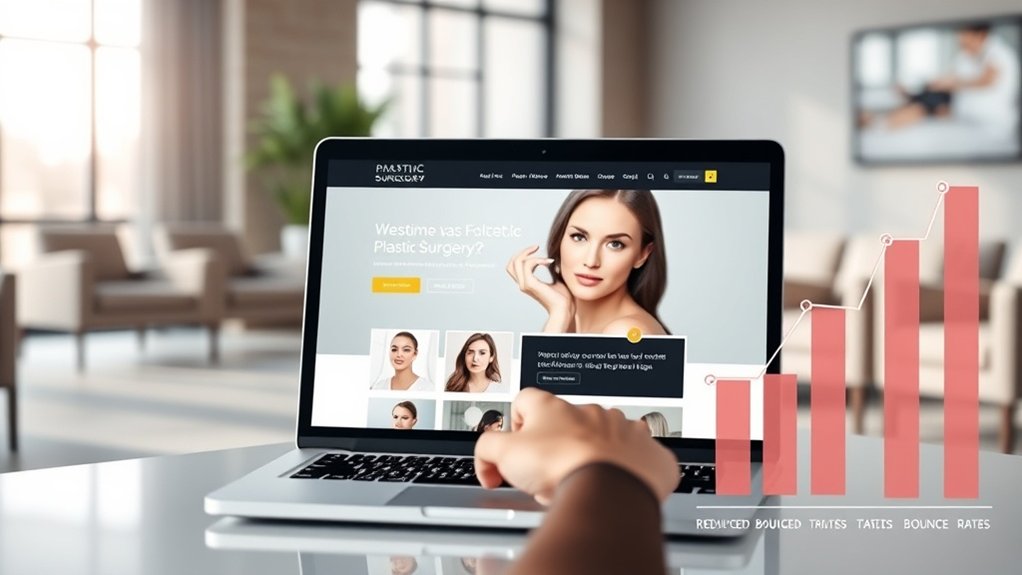
When analyzing your plastic surgery website’s performance, bounce rate serves as a critical indicator of whether visitors find your content valuable enough to investigate beyond their initial landing page.
For plastic surgery websites, you’ll want to target a bounce rate around 40% or lower, though healthcare sites typically maintain acceptable ranges between 45-66%. If your metrics exceed 55%, you’re likely facing issues with content relevance, navigation, or user experience that demand immediate attention.
Your website performance directly impacts visitor expectations and user engagement. Slow page load times, unclear navigation paths, and irrelevant content consistently drive prospects away before they convert into consultations.
Optimizing Page Speed and Mobile Performance for Better User Retention
Because your website’s technical performance directly determines whether potential patients stay or leave within seconds, page speed optimization must be your foundation for reducing bounce rates.
Target a page load speed under 3 seconds—each additional second can decrease conversions by 7%. Use Google’s PageSpeed Insights to identify technical strategies like optimizing images and reducing server response times.
With 63% of web traffic from mobile devices, mobile optimization isn’t optional. Implement browser caching and minify CSS files to improve mobile-responsive website design.
Add click-to-call features so potential patients can instantly schedule consultations. These technical improvements improve user experience while keeping engaging content accessible.
Remember: fast-loading, mobile-optimized sites greatly reduce bounce rate by meeting patient expectations for immediate, logical interactions across all devices.
Creating Engaging, Scannable Content That Keeps Visitors on Your Site

Plastic surgery patients spend an average of 54 seconds scanning a webpage before deciding whether to continue reading or leave—making your content’s visual structure as critical as its information.
Creating engaging content through scannable formatting directly impacts user experience and helps reduce bounce rates.
Structure your content to maximize engagement:
- Use clear headings and bullet points to break down procedure information, making complex details digestible.
- Incorporate before-and-after galleries and infographics as visuals that encourage visitors to investigate additional services.
- Add FAQ sections addressing patient inquiries to build trust and provide immediate answers.
Strategic calls-to-action guide visitors toward appointments, while regularly updating relevant topics keeps content fresh.
This conversion-focused approach transforms casual browsers into engaged prospects.
Maximizing Above-The-Fold Impact With Trust Signals and Clear Calls-To-Action
Your website’s above-the-fold section—the content visible before scrolling—determines whether 80% of visitors will engage further or leave immediately.
Position patient testimonials and before-after galleries prominently here to establish credibility instantly. These trust signals, combined with clear calls-to-action like “Book a Consultation,” create a compelling user experience that reduces bounce rates by up to 25%.
Strategic placement matters greatly. Your CTAs should feature contrasting colors and actionable language that guide visitors toward conversion immediately.
High-quality visual content—professional photography and engaging headlines—captures attention while building confidence in your practice.
Plastic surgery websites that prioritize these elements above the fold see dramatically improved interaction rates.
When you combine authentic trust signals with accessible CTAs, you’re creating a conversion-focused environment that encourages visitors to investigate your services rather than clicking away.
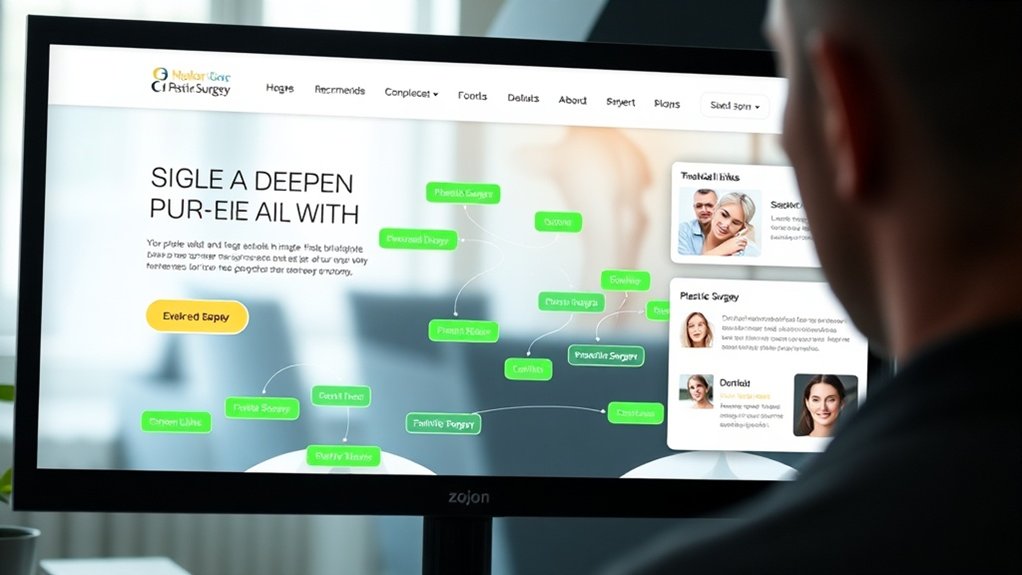
Getting visitors to engage with your above-the-fold content solves only half the bounce rate equation—the other half depends on where they go next.
Strategic internal links and navigation structure directly impact user experience by guiding engaging visitors through your site hierarchy toward relevant content that drives website conversion.
Three proven tactics to reduce bounce rates through navigation:
- Implement contextual internal links within procedure descriptions that connect to before-and-after galleries, patient testimonials, and related treatments, encouraging visitors to investigate pages naturally.
- Add breadcrumb trails so users understand their position within your site hierarchy and guide back confidently without abandoning your site.
- Audit internal links quarterly to verify connections remain functional and relevant, maintaining pathways that support deeper investigation and sustained engagement.